
Gold Adsorption
Carbon must efficiently recover gold from solution and retain it until desorption.
Coconut shell activated carbon for gold adsorption from solutions and pulp. Selected for the plant flowsheet, operating parameters and mechanical strength requirements.
Carbon must efficiently recover gold from solution and retain it until desorption.
Low strength leads to attrition, carbon losses and contamination of the circuit.
Granule size affects hydraulics, contact with solution and screen performance.
High ash content and unstable parameters can reduce the stability of the sorption cycle.
Gold adsorption directly in the pulp.
Adsorption after leaching in separate sorption vessels.
Operation with solutions after heap or tank leaching.
Carbon must retain its structure after operating cycles.
| Parameter | Why It Matters | What to Clarify |
|---|---|---|
| Particle size | Affects hydraulics, screen retention and contact with solution | 6×12, 5×10, 4×8 mesh |
| Iodine number | Indirectly indicates the development of the pore structure | Typically 1000–1100 mg/g for gold recovery applications |
| Mechanical strength | Determines resistance to attrition | High mechanical strength is critical for CIL/CIP |
| Ash content | High ash content can reduce quality stability | The lower the ash content, the better for stable operation |
| Moisture | Affects the actual mass of active product | Clarify during supply and storage |
| Bulk density | Important for calculating loading volume | Consider when designing columns and vessels |
Efficient gold recovery from solutions in CIL and CIP circuits depends on the actual loading capacity of the carbon.
Strength affects carbon losses during transportation, agitation and regeneration.
The same carbon can perform differently under different circulation and desorption conditions.
CIL, CIP, sorption columns or heap leaching.
Pulp or solution volume, flow rate and contact time.
Required granule size and compatibility with screens.
Maximum adsorption, lower attrition or stable operating cycle.
Temperature, reagents and number of cycles.
Carbon losses, attrition, poor adsorption or contamination.
High strength reduces attrition and carbon carryover from the circuit.
High-quality carbon helps retain gold in the circuit.
Carbon should withstand several operating cycles.
Stable particle size and strength make operation easier.
Activated carbon is used to recover dissolved gold from pulp or solutions, after which it goes through desorption and regeneration for reuse.
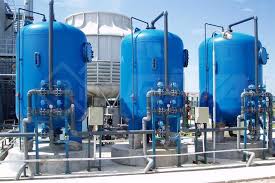
We define where the carbon is used: CIL, CIP, columns or solutions.
We check the equipment, screens, hydraulics and operating mode.
We assess iodine number, strength, ash content, moisture and density.
We prepare the supply proposal based on volume, delivery time and plant requirements.
The operating efficiency of carbon depends on the specific sorption scheme, solution parameters, circulation mode and regeneration conditions. Therefore, carbon must be selected for actual production conditions.
Iodine number is important, but for CIL/CIP, strength, particle size, ash content and batch stability are also critical.
Low-strength carbon attrits, creates fines and may be lost from the circuit.
It depends on the process and equipment. 6×12, 5×10 or 4×8 mesh are commonly used, but selection should be plant-specific.
It is better to compare parameters and, if necessary, run a trial batch to assess adsorption and attrition.
Send your process flowsheet, required particle size and current issue. We will prepare a proposal for carbon and supply.
We respond within 1 business day.